

Artificial Intelligence (AI) continues to fundamentally reshape the global economy
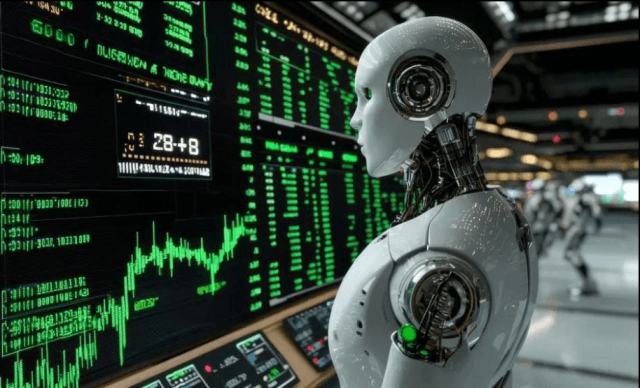
offering unprecedented opportunities for innovation and efficiency. It transforms entire industries, optimizes business processes, and drives economic growth. The metric of AI market capitalization is crucial, reflecting the economic value and potential of AI technologies. Understanding this metric helps businesses and investors gauge AI's impact and future prospects.
Reaching a multi-trillion-dollar valuation signifies a company's dominance and influence within the AI sector, showcasing scalability and market confidence in AI-driven solutions. Explore more about AI market capitalization at AI Market Cap.
Historical Context
The past decade has seen explosive growth in AI market capitalization, driven by fundamental technological breakthroughs and strategic industry milestones. Initially, AI technologies were confined to academia, but their commercialization gained momentum in the 2010s.
2012: Deep learning breakthroughs radically enhanced image and speech recognition capabilities.
2016: AlphaGo's victory over a human world champion demonstrated AI's immense potential.
2020: The COVID-19 pandemic accelerated AI adoption in remote work and automation.
2023: The emergence of generative AI, like ChatGPT, spurred a new wave of investment and innovation.
2024: AI became an integral part of the user experience, with powerful multimodal models (like GPT-4o and Gemini 1.5) integrated into operating systems and search engines. The first "AI PCs" hit the market.
2025: The era of personalized autonomous agents capable of handling complex business tasks begins. Mass adoption of specialized AI hardware becomes standard in the corporate sector.
These milestones underscore AI's transition from a niche technology to a cornerstone of modern business strategy.
Current State of AI Market Capitalization (December 2025)
The AI market is experiencing exponential growth. As of late 2025, the sector's combined market capitalization is approaching the $1.5 trillion mark, driven by breakthroughs in autonomous systems and the deep integration of AI into enterprise products.
Leading companies include:
NVIDIA: Has solidified its dominance as the key infrastructure provider, with its chips powering the vast majority of advanced AI systems.
Microsoft: The deep integration of OpenAI models into its Azure ecosystem and Copilot products has made it the leader in enterprise AI.
Alphabet (Google): Competes aggressively with its multimodal Gemini ecosystem, integrated across Search, Cloud, and Android devices.
Amazon: Has strengthened its position with the AWS Bedrock platform, offering businesses access to a wide range of foundational models.
Competition has reached a new level; the battle is no longer just for market share but for creating the dominant technological ecosystem. Innovation in both hardware (NVIDIA chips, Google TPUs) and software (models from OpenAI, Google, Anthropic) defines the market's dynamics.
Key Factors Driving Growth
The rapid growth in AI market capitalization is fueled by several key factors that have become even more pronounced by 2025.
Technological Innovations: Breakthroughs in multimodal models that simultaneously process text, images, and code, along with the development of autonomous AI agents, are opening new application frontiers.
Corporate and Government Investment: The race for AI leadership has taken on geopolitical significance. Corporations and governments alike are pouring tens of billions of dollars into R&D and national AI infrastructure.
Deep Integration into Business Processes: Companies have moved from pilot projects to full-scale AI implementation to automate core functions—from logistics and finance to product development and customer engagement.
These factors create a synergistic effect, ensuring robust and explosive growth for the entire sector.
Challenges and Risks
Challenges and Risks
Despite its immense potential, the AI market faces significant challenges and risks that stakeholders must navigate.
Ethical Dilemmas and Disinformation: The proliferation of deepfakes and AI's ability to generate convincing false information have become major societal concerns.
Regulatory Pressure: The EU's "AI Act" and similar legislation in other countries are creating a complex and fragmented legal landscape, imposing significant compliance costs on companies.
Resource Scarcity: AI's growing demand for computing power and energy is leading to shortages of advanced chips and placing immense strain on power grids and water resources.
Successfully addressing these challenges requires a collaborative approach from developers, businesses, and regulators to build a balanced and responsible AI ecosystem.
Future Projections (View from late 2025)
The future of AI market capitalization is poised for significant growth, but it is also fraught with challenges. Experts predict several key trends for the coming years:
Growth to New Heights: By 2030, the AI sector's market value is projected to exceed $5 trillion as AI becomes the foundational layer for most digital services.
The Rise of Specialized AI: General-purpose models will give way to highly specialized AIs trained for specific industries like medicine, law, and engineering, increasing their accuracy and value.
Physical Embodiment of AI: The convergence of AI with robotics and IoT will lead to "embodied AI"—intelligent robots and devices capable of interacting with the physical world.
Hyper-Personalization: AI assistants will become proactive, anticipating user needs and managing their digital and even physical lives. The Battle for Talent and Resources: A shortage of skilled professionals and computational resources will become the primary limiting factor for growth for many companies. These projections paint a picture of a dynamic and competitive market where success will depend on the ability to adapt to new technological and regulatory realities.
Conclusion
In conclusion, the rise of AI to a multi-trillion-dollar market capitalization signifies a pivotal shift in the technological and business landscapes. This milestone underscores AI's transformative potential across key sectors:
Healthcare: Accelerating genomic analysis and drug discovery, and powering robotic surgery.
Finance: Enabling fully autonomous trading algorithms and proactive risk management.
Manufacturing: Creating self-optimizing "smart factories" and predictive supply chains.
Retail: Driving hyper-personalized shopping experiences and real-time, automated inventory management.
As AI continues to evolve, its economic impact will only intensify, influencing global markets, labor dynamics, and innovation trends. Businesses must adapt quickly, integrating AI to maintain competitiveness. Policymakers, too, face the challenge of balancing innovation with robust governance to ensure ethical and safe AI deployment. Ultimately, AI's journey to a multi-trillion-dollar valuation not only highlights its current capabilities but also defines the shape of a future that is already here.